

This store requires javascript to be enabled for some features to work correctly.


Welcome to Carnivero’s living wall—a vertical showcase of botanical wonder! This lush installation features a dynamic mix of aroids, carnivorous plants, bromeliads, and orchids. Each plant has been carefully selected to create a thriving, layered ecosystem, offering visitors a chance to explore and learn about the incredible variety of forms, textures, and colors in the plant world. Use this page to identify the plants you see and discover the stories behind each unique species.


Anthurium wendlingeri is a striking, tropical species known for its long, pendulous inflorescences that resemble twisted corkscrews. Native to Central and South America, it features thick, strap-like leaves with a leathery texture and deep green sheen. This epiphytic plant thrives in bright, filtered light and high humidity


Anthurium longissimum (often referred to as A. longissimum or longissimobum) is a dramatic, strap-leaf species prized for its exceptionally long, narrow foliage that can reach several feet in length. The leaves are glossy, deeply veined, and hang elegantly from the plant, giving it a graceful, tropical look. Native to rainforest habitats of Central and South America, this species thrives in warm, humid conditions with bright, indirect light


Anthurium sp. ‘Morona’ is a rare and striking aroid believed to originate from the Morona region of Ecuador. It features elongated, velvety leaves with prominent white venation and a deep green to almost black hue, giving it an elegant, high-contrast appearance. Like many Andean species, it thrives in cool to moderate temperatures, high humidity, and bright, diffused light.


Philodendron longilobatum is a climbing aroid native to Brazil, characterized by its elongated, deeply lobed leaves. It prefers warm, humid conditions with bright, indirect light and is commonly grown as a specimen for its distinctive leaf morphology.

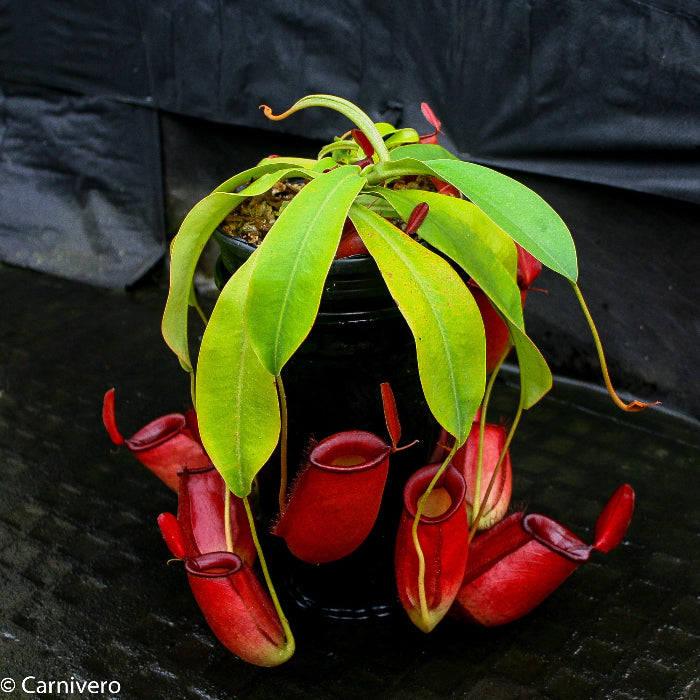
Nepenthes ‘Diana’ is a tropical pitcher plant hybrid that thrives in intermediate conditions. It produces colorful, tubular pitchers with a flared peristome and attractive lid, combining traits from its parent species to create a compact, vigorous plant suitable for a range of temperatures and humidity levels.


Platycerium ridleyi is a staghorn fern native to Southeast Asia, known for its large, deeply lobed fronds and impressive antler-like growth. It is an epiphytic species that grows well mounted on wood or in hanging baskets, preferring bright, indirect light, high humidity, and good air circulation. Its distinctive shield fronds help anchor the plant and collect organic matter, making it both a functional and ornamental fern.


Anthurium cirinoi × warocqueanum is a hybrid aroid combining the elongated, velvety leaves of A. warocqueanum with the compact, structured growth of A. cirinoi. The resulting plant features long, dark green, lanceolate leaves with a pronounced texture and prominent veins.


Philodendron spiritus-sancti is a uncommon aroid from Brazil, renowned for its exceptionally long, glossy, lanceolate leaves with a striking central vein. It is an epiphytic climber that thrives in warm, humid conditions with bright, indirect light. Highly sought after by collectors, it is prized for its dramatic foliage and slow, deliberate growth.


Tillandsia is a genus of epiphytic plants in the Bromeliaceae family, commonly known as air plants. They absorb water and nutrients through their leaves rather than roots, allowing them to grow on trees, rocks, or other surfaces. Tillandsias thrive in bright, indirect light, with regular misting or soaking for hydration, and are valued for their low-maintenance growth and striking, often silvery or colorful foliage.


Philodendron bicolor is a climbing aroid native to Colombia and Ecuador, known for its large, blade-shaped leaves with a striking two-tone coloration—dark green on the upper surface and deep red-purple underneath.


Dendrobium is a large genus of epiphytic and lithophytic orchids native to Asia, Australia, and the Pacific Islands. Species in this genus display a wide range of growth habits, from compact to cane-like, and often produce long-lasting, colorful flowers. Dendrobiums generally prefer bright, indirect light, good air circulation, and a distinct dry period to encourage flowering, making them a versatile and popular choice for orchid enthusiasts.


Philodendron joepii is a lowland climbing aroid from Brazil, known for its long, deeply lobed leaves and glossy dark green foliage. It prefers warm, humid conditions with bright, indirect light and well-draining soil. This species is prized for its striking leaf morphology and vigorous climbing habit.


Piper sylvaticum is a tropical vine in the Piperaceae family, native to Southeast Asia. It is a climbing or trailing plant with heart-shaped leaves and small, spike-like inflorescences. This species thrives in warm, humid, shaded environments and is typically found in forest understories, reflecting its adaptation to low-light conditions.


Monstera croatii is a rare tropical aroid native to Panama. It is a climbing hemiepiphyte with thick, glossy, dark green leaves that develop fenestrations (natural holes) as they mature. The species prefers warm, humid conditions with bright, indirect light and well-draining soil, making it a prized plant for collectors of rare Monstera species.


Philodendron verucosum ‘Queen of Hearts’ is a rare form of the classic verrucosum, from Ecuador. It is a climbing hemiepiphyte with thick, velvety leaves featuring dark green surfaces and contrasting pale veins. The species prefers warm, humid conditions, bright indirect light, and well-draining soil, and is highly prized for its striking foliage with deep maroon / purple backings.


Philodendron White Dragon is a rare aroid cultivar of Philodendron erubescens or closely related species, prized for its striking variegation. The leaves are typically dark green with silvery-white marbling or streaks, creating a dramatic contrast. It is a climbing hemiepiphyte that prefers warm, humid conditions


Begonia (hybrid) refers to cultivated varieties of Begonia produced by crossing different species to combine desirable traits such as foliage color, leaf shape, or flower form. These plants can be rhizomatous, tuberous, or fibrous-rooted, depending on the parentage. Hybrids generally prefer bright, indirect light, high humidity, and well-draining soil, and are popular in collections for their ornamental leaves and showy flowers.


Anthurium luxurians is a lowland tropical aroid native to Central and South America, distinguished by its thick, pebble-textured leaves. It is an epiphytic or terrestrial climber that thrives in warm, humid conditions with bright, indirect light and well-draining substrate. The species is prized for its robust, textured foliage and striking presence in aroid collections.


Philodendron ‘Jose Buono’ is a variegated cultivar of Philodendron, prized for its striking leaves that feature irregular patches of cream or white against deep green. It is a climbing hemiepiphyte that prefers warm, humid conditions, bright indirect light, and well-draining substrate.