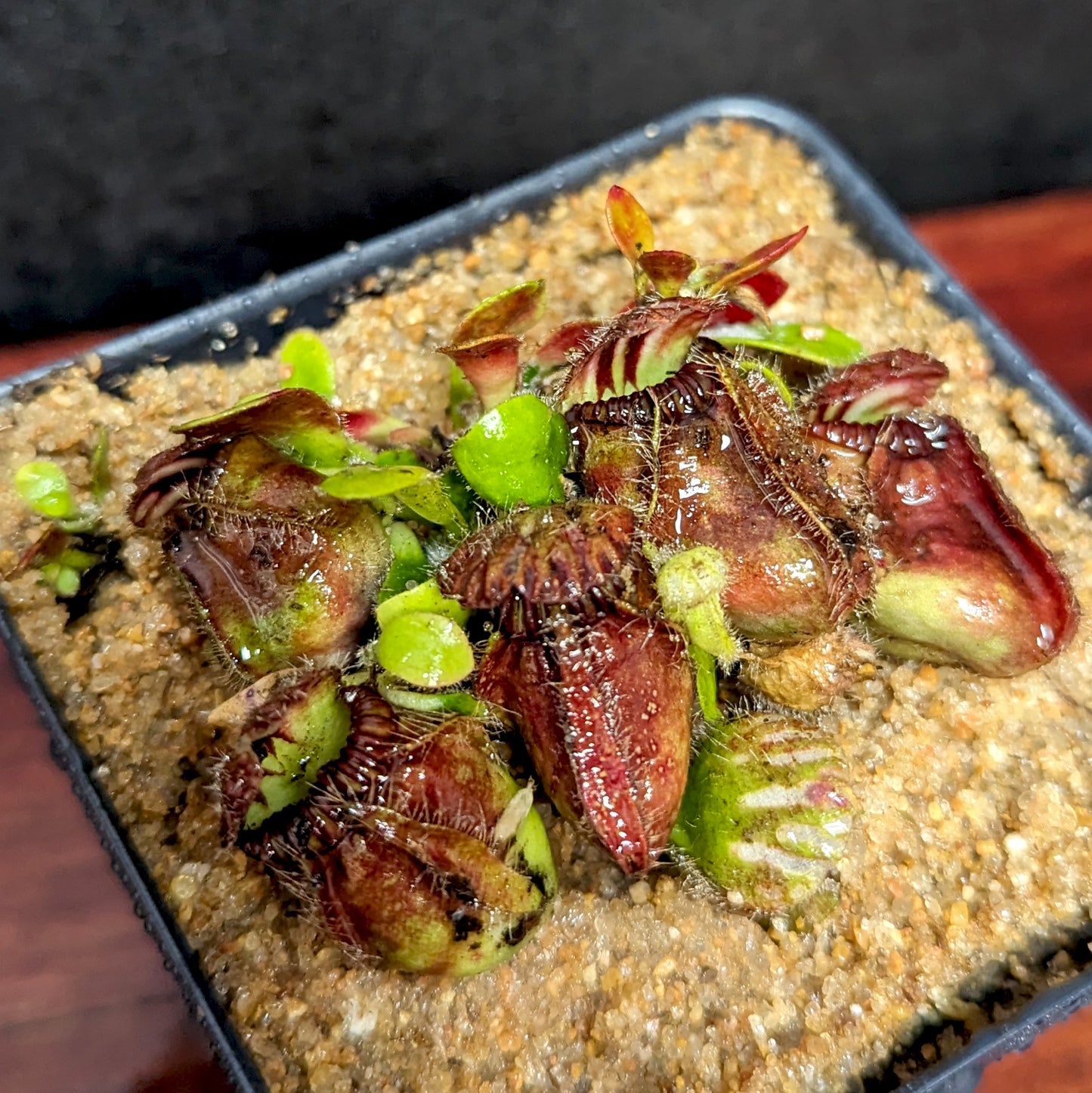
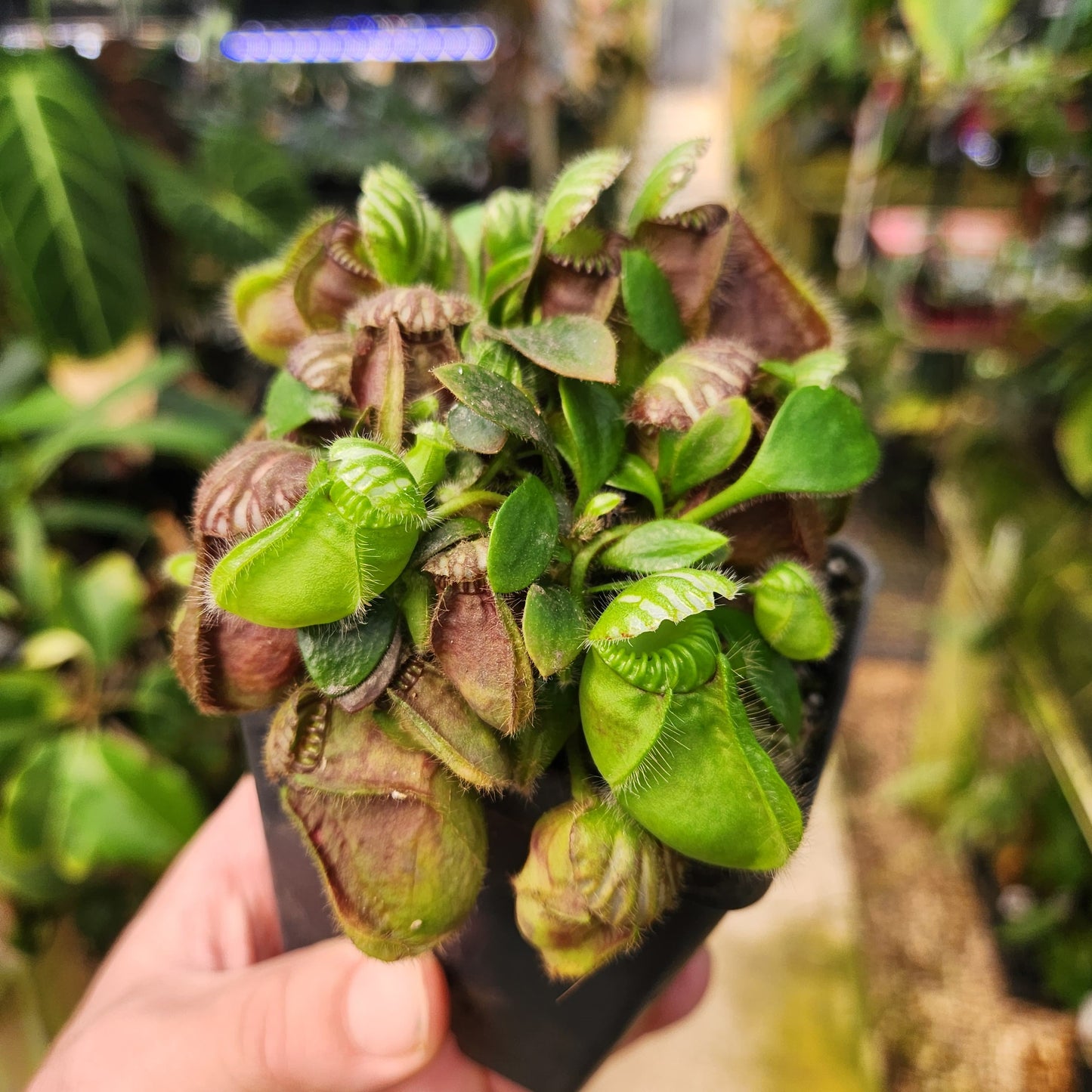


Cephalotus follicularis, IMP-0005
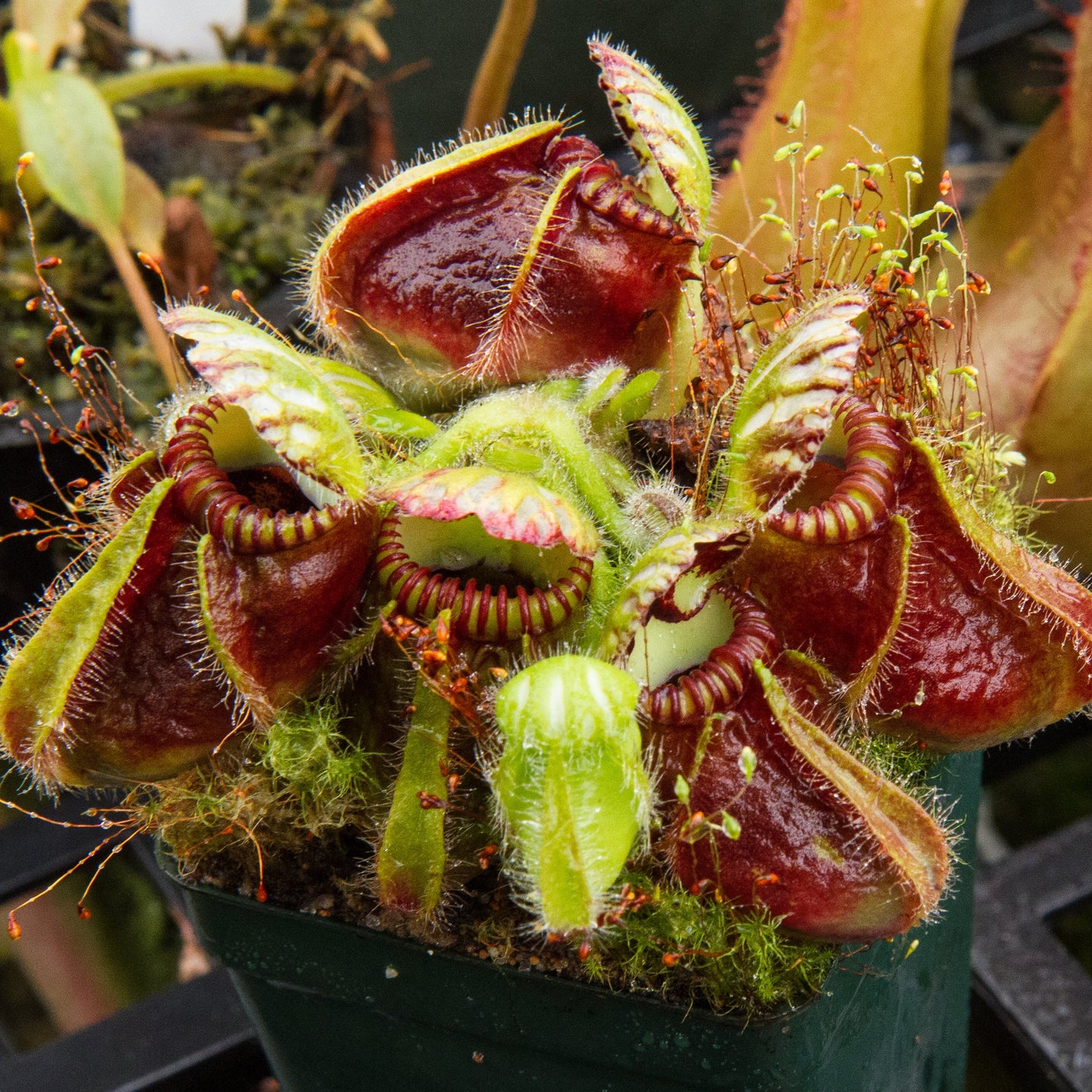
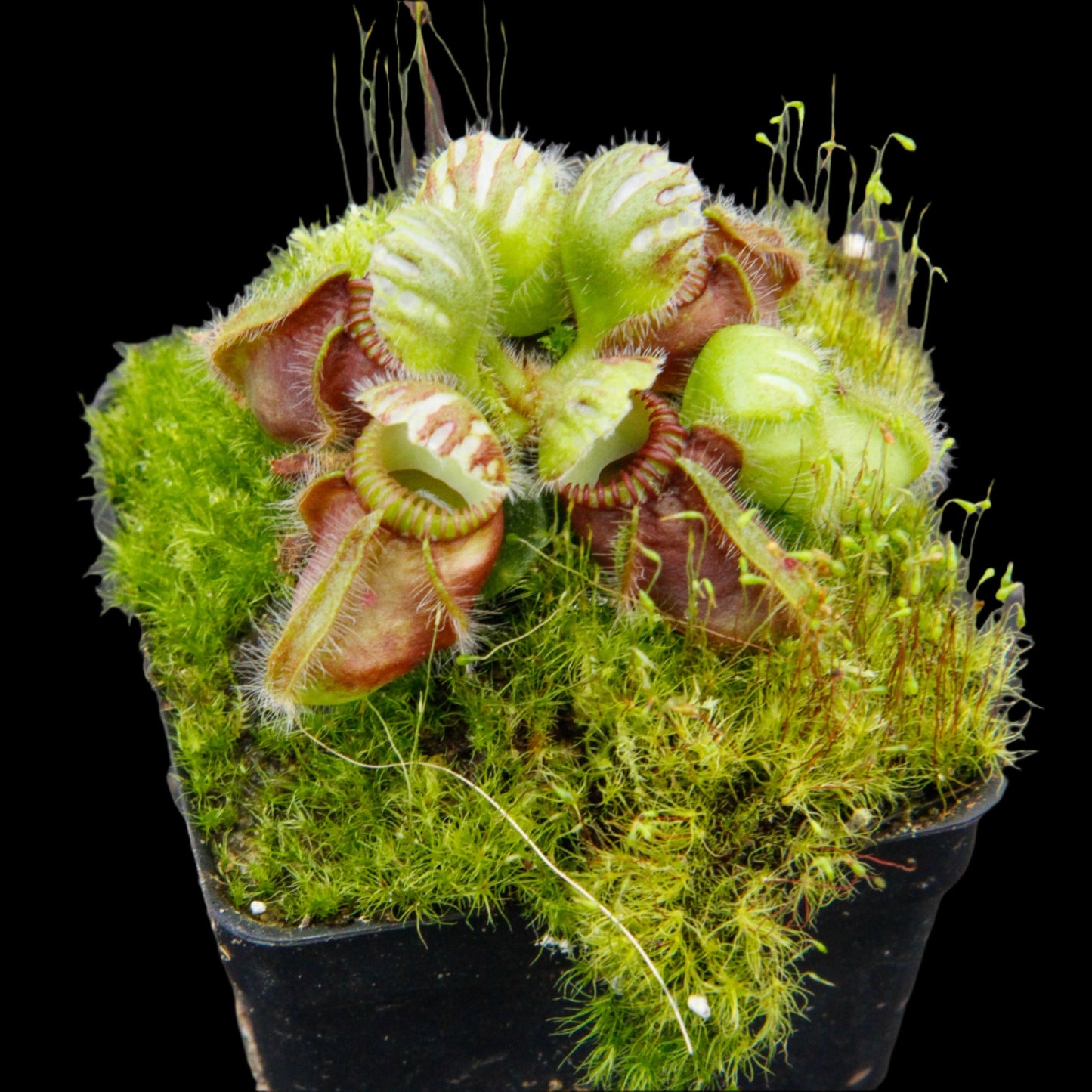
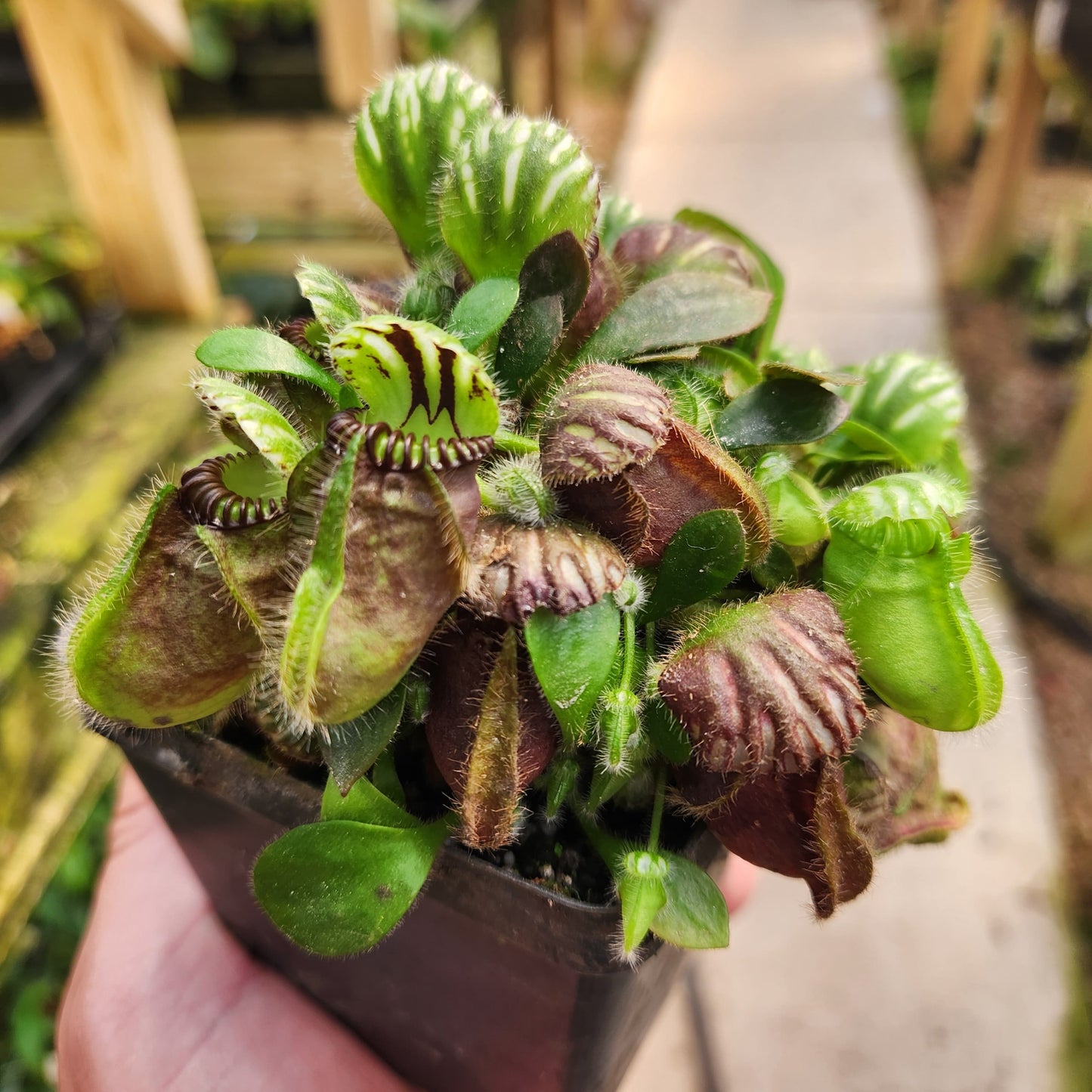
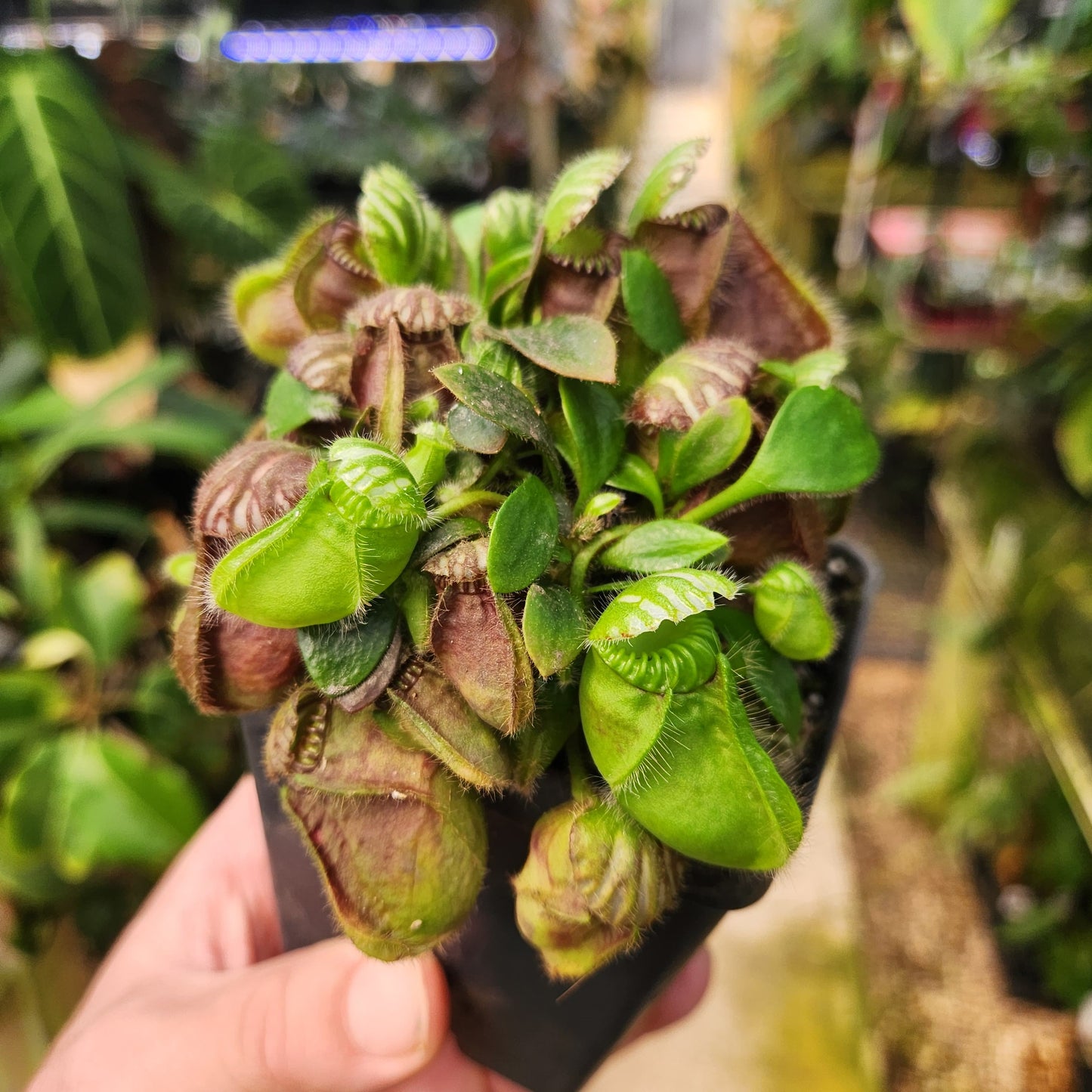
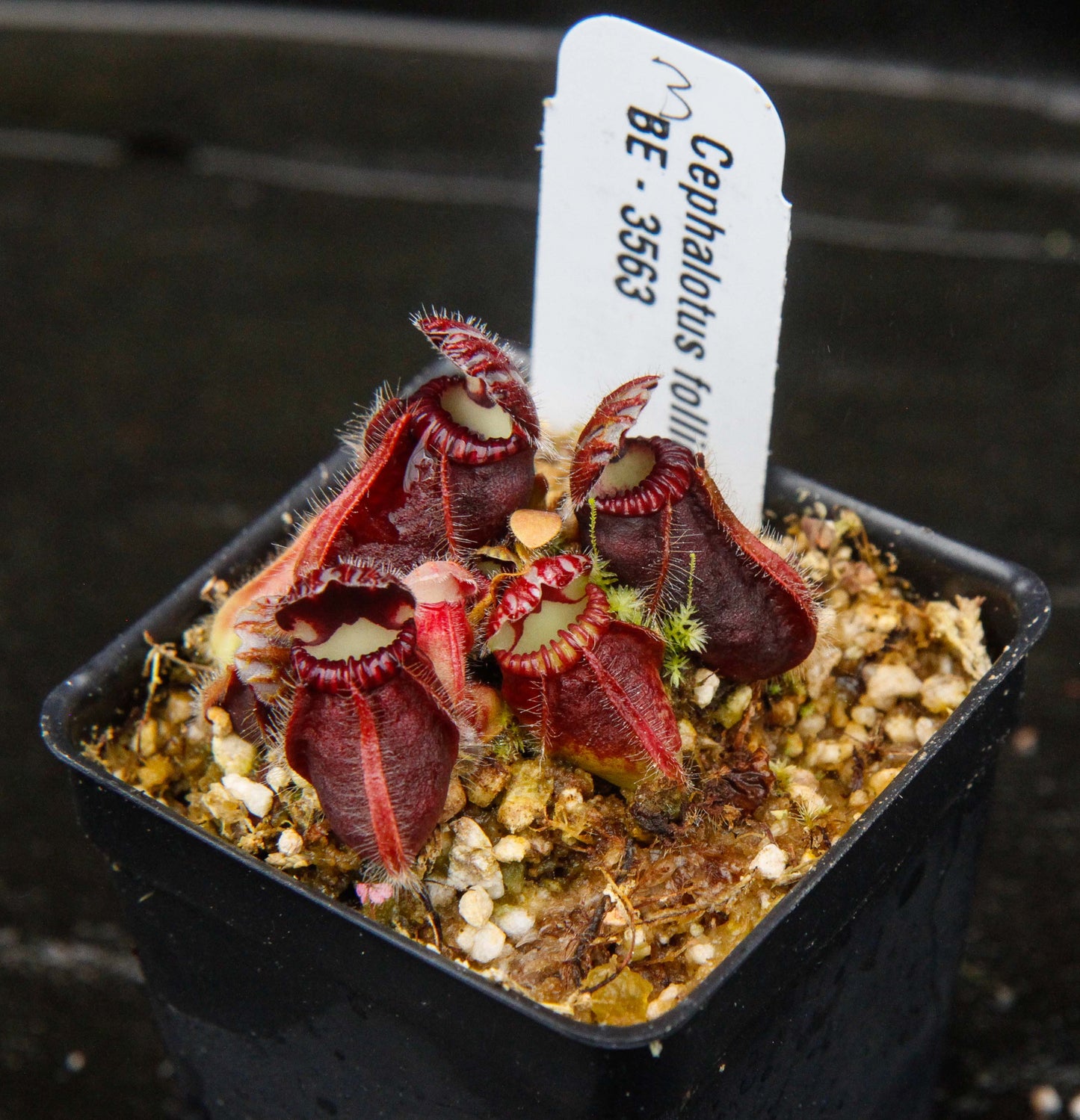
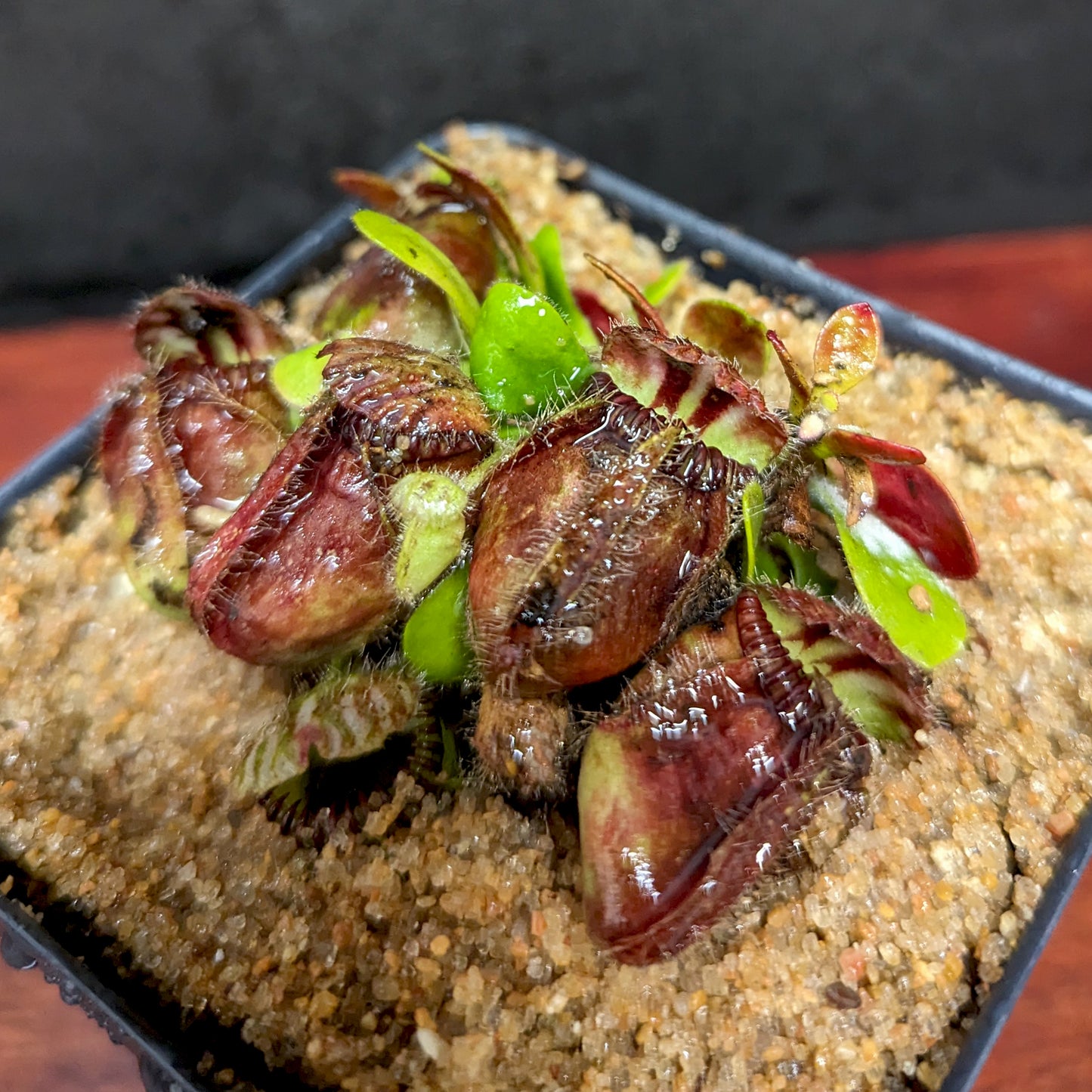
Cephalotus is native to Western Australia where it grows along the seashores on the coast in mediterranean-like climates. It is totally unique amongst carnivores and the genus is monotypic. It develops 2 types of leaves, one carnivorous and the other foliar. The carnivorous leaves are mocassin-like and can be very colorful when grown with strong lighting.
Generally, we’ve found Cephalotus to prefer to be kept wet but not waterlogged with water very low in salts (<100ppm). Though the plants certainly appreciate high humidity (>60%), they do not like their leaves remaining constantly wet. More sun exposure produces smaller, but more colorful pitchers whereas larger pitchers to are produced in shadier conditions. They really seem to thrive under artificial lights such as fluorescents and LEDs. We’ve found Cephalotus best grown with day temps between 65-85 degrees and a night time temperature drop (45-60). They are tolerant of warmer temperatures for a few weeks but temps over 100 should be avoided. They should be kept above freezing.
Sizing
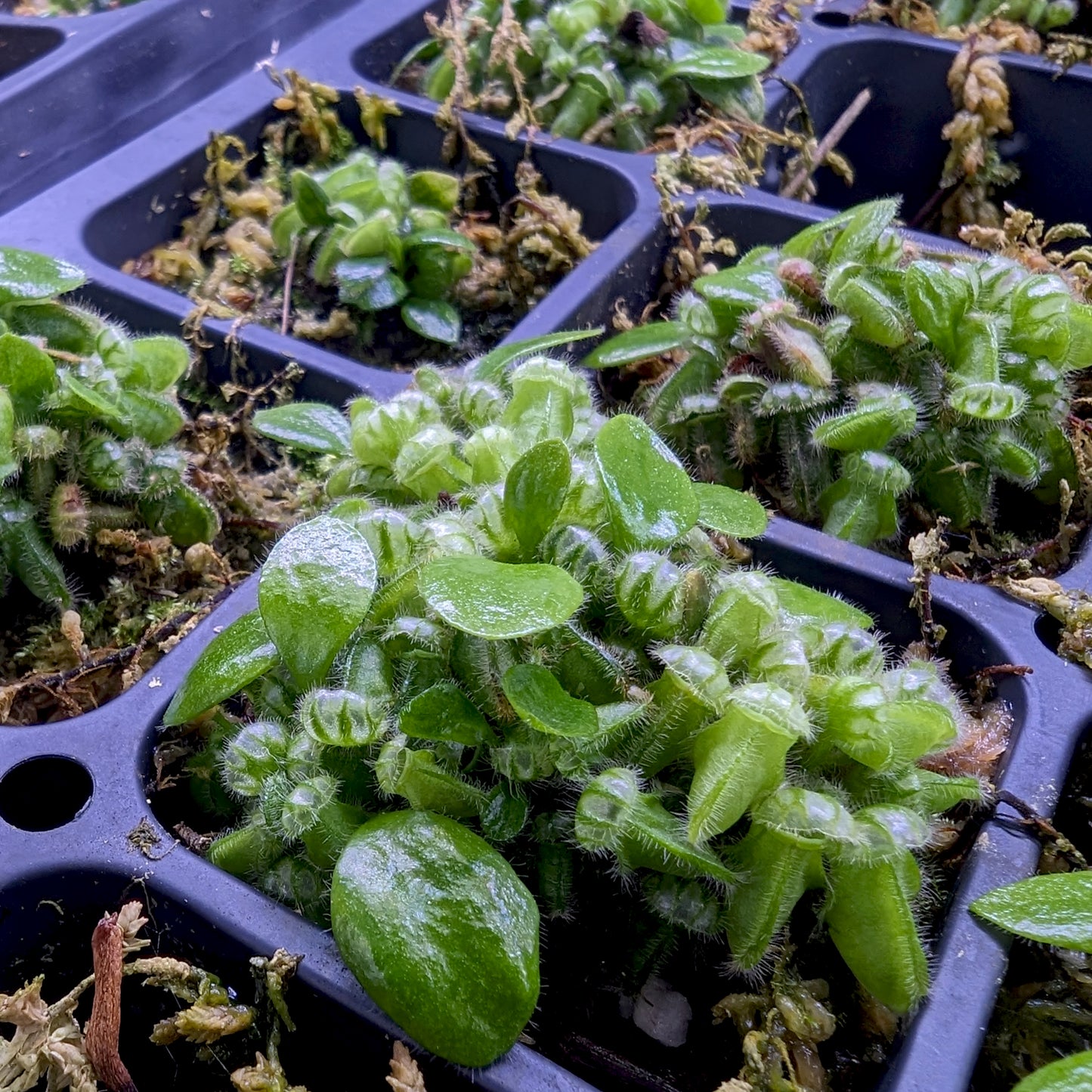
Small sized plants have juvenile pitcher. Medium sized plants will have adult leaves and pitchers and will be sized for a 3-4" pot. Large size will have multiple growth points.
This product is considered a Highland Tropical Plant, but please view our Cephalotus Care Guide for detailed instructions.
Please see our Shipping and Guarantees policy for cold/hot weather shipping guidelines.
| Temp | Day temperatures at 65-85 degrees, with nighttime temperatures of 45-60 degrees (F) |
| Light | 14 - 16 hours of bright, direct light |
| Humidity | High humidity (>60%) is recommended, but with strong air flow. Cephalotus can be bag acclimated to ambient household humidity. Check our bag acclimation guide for details. |
| Watering | Water with pure distilled, rain, or reverse osmosis water. We recommend bottom-watering Cephalotus with the tray method and letting the water in the tray evaporate before adding more. |
For more information see our Cephalotus Care Guide
| Temp | Day temperatures at 65-85 degrees, with nighttime temperatures of 45-60 degrees (F) |
| Light | 14 - 16 hours of bright, direct light |
| Humidity | High humidity (>60%) is recommended, but with strong air flow. Cephalotus can be bag acclimated to ambient household humidity. Check our bag acclimation guide for details. |
| Watering | Water with pure distilled, rain, or reverse osmosis water. We recommend bottom-watering Cephalotus with the tray method and letting the water in the tray evaporate before adding more. |
For more information see our Cephalotus Care Guide
Extra small (XS) - <2" leafspan
Small - 2"-3" leafspan
Medium - 3"-6" leafspan
Large - 6"-12" leafspan
Extra Large (XL) - >12" leafspan
XXL - Huge plants that are vining and of flowering size
See our sizing guide for more information.
Extra small (XS) - <2" leafspan
Small - 2"-3" leafspan
Medium - 3"-6" leafspan
Large - 6"-12" leafspan
Extra Large (XL) - >12" leafspan
XXL - Huge plants that are vining and of flowering size
See our sizing guide for more information.
All plants have a live arrival guaranteed. More information here.
All plants have a live arrival guaranteed. More information here.
Cephalotus follicularis, IMP-0005
Cephalotus is native to Western Australia where it grows along the seashores on the coast in mediterranean-like climates. It is totally unique amongst carnivores and the genus is monotypic. It develops 2 types of leaves, one carnivorous and the other foliar. The carnivorous leaves are mocassin-like and can be very colorful when grown with strong lighting.
Generally, we’ve found Cephalotus to prefer to be kept wet but not waterlogged with water very low in salts (<100ppm). Though the plants certainly appreciate high humidity (>60%), they do not like their leaves remaining constantly wet. More sun exposure produces smaller, but more colorful pitchers whereas larger pitchers to are produced in shadier conditions. They really seem to thrive under artificial lights such as fluorescents and LEDs. We’ve found Cephalotus best grown with day temps between 65-85 degrees and a night time temperature drop (45-60). They are tolerant of warmer temperatures for a few weeks but temps over 100 should be avoided. They should be kept above freezing.
Sizing
Small sized plants have juvenile pitcher. Medium sized plants will have adult leaves and pitchers and will be sized for a 3-4" pot. Large size will have multiple growth points.
This product is considered a Highland Tropical Plant, but please view our Cephalotus Care Guide for detailed instructions.
Please see our Shipping and Guarantees policy for cold/hot weather shipping guidelines.
| Temp | Day temperatures at 65-85 degrees, with nighttime temperatures of 45-60 degrees (F) |
| Light | 14 - 16 hours of bright, direct light |
| Humidity | High humidity (>60%) is recommended, but with strong air flow. Cephalotus can be bag acclimated to ambient household humidity. Check our bag acclimation guide for details. |
| Watering | Water with pure distilled, rain, or reverse osmosis water. We recommend bottom-watering Cephalotus with the tray method and letting the water in the tray evaporate before adding more. |
For more information see our Cephalotus Care Guide
| Temp | Day temperatures at 65-85 degrees, with nighttime temperatures of 45-60 degrees (F) |
| Light | 14 - 16 hours of bright, direct light |
| Humidity | High humidity (>60%) is recommended, but with strong air flow. Cephalotus can be bag acclimated to ambient household humidity. Check our bag acclimation guide for details. |
| Watering | Water with pure distilled, rain, or reverse osmosis water. We recommend bottom-watering Cephalotus with the tray method and letting the water in the tray evaporate before adding more. |
For more information see our Cephalotus Care Guide
Extra small (XS) - <2" leafspan
Small - 2"-3" leafspan
Medium - 3"-6" leafspan
Large - 6"-12" leafspan
Extra Large (XL) - >12" leafspan
XXL - Huge plants that are vining and of flowering size
See our sizing guide for more information.
Extra small (XS) - <2" leafspan
Small - 2"-3" leafspan
Medium - 3"-6" leafspan
Large - 6"-12" leafspan
Extra Large (XL) - >12" leafspan
XXL - Huge plants that are vining and of flowering size
See our sizing guide for more information.
All plants have a live arrival guaranteed. More information here.
All plants have a live arrival guaranteed. More information here.